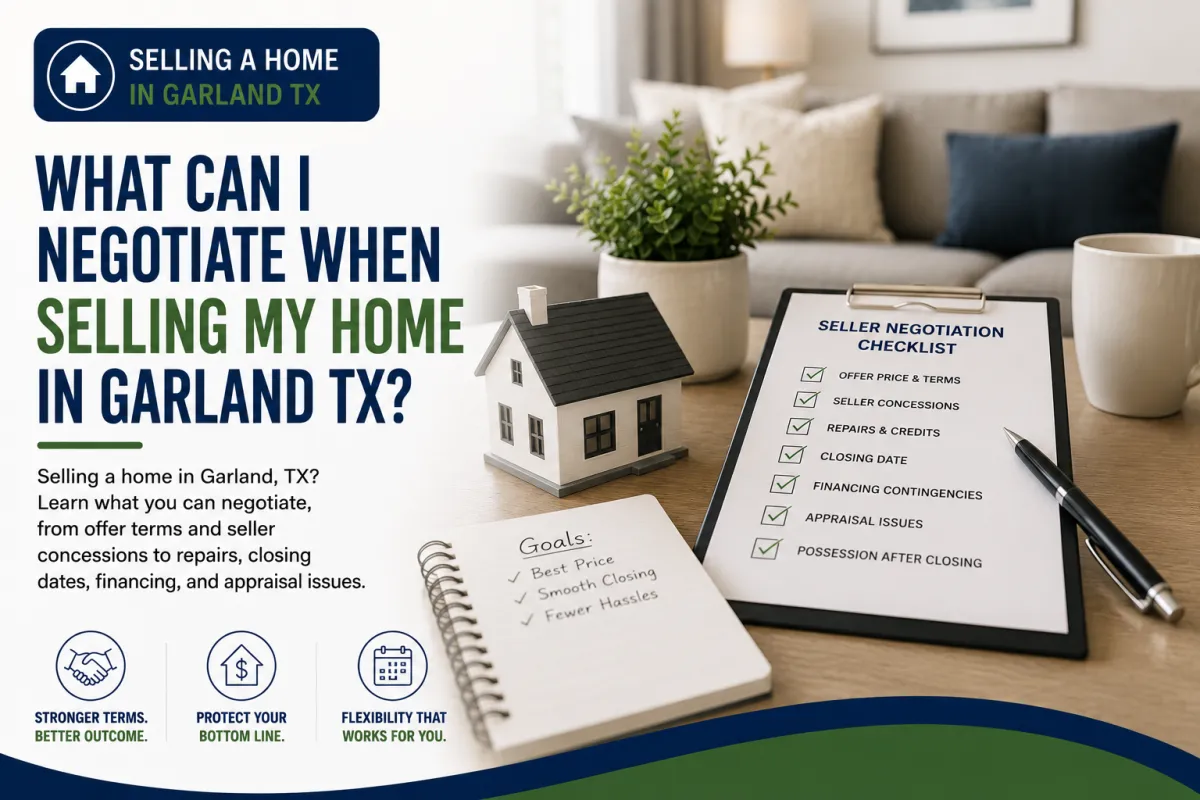
What Can I Negotiate When Selling My Home in Garland TX?
What Can I Negotiate When Selling My Home in Garland, TX?
If you’re selling a home in Garland, TX, negotiation doesn’t happen just once.
Many sellers think negotiation means receiving an offer, going back and forth over the price, and signing the contract. But there can actually be several points during a home sale when you may need to make a negotiation decision.
The three big ones are:
The initial offer and contract
Repairs during the option period
Financing and appraisal issues
And one of the most important things I tell sellers is this: the highest offer isn’t automatically the best offer.
The price matters, of course. But so do the terms surrounding that price.
That’s why I like sellers to understand their priorities before we ever put the home on the market. When an offer arrives, we can evaluate it based on the complete picture instead of reacting to one number at the top of the contract.
Negotiation Starts Before Your Garland Home Is Listed
One of the ideas behind my Seller Readiness & Control Framework™ is that sellers should prepare for important decisions before they’re under pressure to make them.
Negotiation is a good example.
Before I list a home, I walk through the property with the seller and look for potential issues that could come up later.
Are there obvious repairs that should be made?
Are there maintenance items that could concern a buyer?
Are there things we can reasonably address now instead of waiting for them to appear on an inspection report?
If the seller has the budget and it makes sense for their situation, we may take care of some of those items before listing.
We also talk about money.
If repair requests come later, what might the seller be comfortable spending?
At what point would a request become more than they’re comfortable accepting?
We can't predict exactly what a buyer or inspector will find, but having those conversations ahead of time can make later negotiations much easier to evaluate.
Negotiation #1: The Initial Offer
This is the negotiation most sellers expect.
A buyer makes an offer, and you decide whether to accept it, reject it, or negotiate different terms.
But purchase price is only one part of the offer I evaluate.
When I receive an offer on a seller's home, I look at the complete contract before presenting it to the seller.
Earnest Money
I look at how much earnest money the buyer is offering.
Earnest money is part of the buyer's commitment under the contract, so it's one of the terms we want to understand when evaluating the overall offer.
Rather than looking at it in isolation, we look at it alongside the rest of the contract.
The Option Period
In a typical Texas resale transaction, the buyer may negotiate for an option period.
This is an important term for a seller because the length and terms of that option period can affect how long the buyer has the contractual right to terminate under the option provision.
When comparing offers, I look at what each buyer is requesting and how that fits with the rest of their offer.
Seller Concessions
Is the buyer asking the seller to contribute toward allowable buyer expenses?
If so, how much?
An offer can look attractive based on the purchase price, but seller concessions can affect the seller's expected proceeds.
That's why we have to look beyond the headline number.
Closing Date
The closing date matters more than sellers sometimes realize.
One buyer may want to close quickly. Another may need considerably more time.
Neither is automatically better.
What matters is how the timing fits your situation.
Maybe you need time to purchase another home. Maybe you're relocating. Maybe you're already out of the property and would prefer an earlier closing.
The best closing date can be different for every seller.
The Buyer's Financing
I also look at how the buyer plans to purchase the home.
Are they using conventional financing? FHA financing? Are they paying cash?
Different financing situations can have different requirements and considerations, so I want my seller to know what type of financing is attached to the offer they're evaluating.
I also look for an approval or preapproval letter from the buyer's lender when financing is involved. That gives us additional information about whether the buyer has taken meaningful steps toward obtaining financing.
If it's a cash offer, I want to see proof of funds supporting the buyer's ability to complete the purchase.
How I Compare Multiple Offers for a Seller
If we receive multiple offers, I don't simply line them up by purchase price and tell my seller to choose the biggest number.
I compare the offers side by side.
Then I walk the seller through the pros and cons of each one.
We compare:
Purchase price
Earnest money
Option period
Seller concessions
Closing date
Financing type
Approval documentation or proof of funds
Other important contract terms
My role isn't to say, “You have to choose this offer.”
Instead, I give my opinion based on the information we have and help the seller understand the advantages and disadvantages of each offer.
Then the seller can make an informed decision based on what matters most to them.
That's an important distinction.
Good negotiation isn't always about winning one particular term. It's about understanding the entire agreement you're being asked to accept.
A Higher Offer Isn't Always the Stronger Offer
Imagine you receive two offers.
One buyer offers more money but asks for significant seller concessions, a longer option period, and a closing date that doesn't work particularly well for your plans.
Another buyer offers slightly less but has terms that better fit your priorities.
Which offer is better?
There isn't one universal answer.
We would need to look at the complete contracts.
That's why focusing exclusively on purchase price can give sellers an incomplete picture.
The question isn't simply:
“Which buyer offered the most?”
A better question is:
“What are the pros and cons of each offer, and which set of terms works best for what I'm trying to accomplish?”
Negotiation #2: Inspection and Repairs During the Option Period
Once you're under contract, you may think the negotiating is finished.
Then the buyer has the home inspected.
Depending on what the inspection reveals, the buyer may ask for repairs, request another solution, or decide to move forward without requesting changes.
This can create a second negotiation.
And this is one reason I like to discuss potential repair issues with my sellers before we list the property.
Preparing for Repair Negotiations Before You List
When I walk through a seller's home before listing, I'm not performing an inspection. A licensed inspector has a different role.
I'm looking at the property from a listing and preparation perspective.
If we notice something that is clearly damaged or needs attention, we'll discuss whether addressing it before listing makes sense.
Sometimes a seller has the budget to take care of an issue ahead of time.
Sometimes they don't.
Sometimes an item simply isn't worth changing before the home goes on the market.
The important part is that we're making those decisions deliberately.
We also talk ahead of time about the seller's comfort level.
That way, if a buyer later requests repairs, the seller has already thought about questions like:
What am I willing to address?
How much am I comfortable spending?
At what point does this request stop making sense for me?
Those conversations don't eliminate negotiation, but they can help a seller approach it with more clarity.
Does a Seller Have to Agree to Every Repair Request?
A buyer's inspection report isn't automatically a list of repairs the seller is required to make.
What happens next depends on the contract, the buyer's requests, the nature of the issues, and the decisions each party makes.
A seller may agree to certain requests and push back on others.
There may also be circumstances where the parties discuss another solution rather than having the seller complete a particular repair.
The important thing is to evaluate the request rather than automatically saying yes or automatically saying no.
What is the issue?
How significant is it?
What are the buyer's concerns?
What would it cost or involve to address it?
How does the request affect the seller's overall goals?
Those are much more useful questions.
Negotiation #3: Financing and Appraisal Issues
A third potential negotiation point can occur later in the transaction.
If the buyer is financing the purchase, the lender may require an appraisal.
An appraisal that supports the contract price can allow the transaction to continue moving forward.
But what happens if the appraisal comes in below the contract price?
Depending on the contract, financing, appraisal provisions, and circumstances, the buyer and seller may have decisions to make.
That could potentially lead to another negotiation.
There isn't one automatic outcome, which is why it's important to look at the actual contract and situation rather than assume what either party must do.
My Goal Is to Reduce Appraisal Surprises Before We Get There
I haven't personally had one of my listings encounter a low appraisal situation yet, so I'm not going to pretend I have a dramatic low-appraisal negotiation story to tell you.
What I do have is a process designed to help establish a thoughtful pricing strategy before the home hits the market.
I use my EPIC Pricing Strategy Report™ to evaluate relevant market information, including recent sold properties, as we determine a pricing strategy for the home.
The goal isn't to guess at the highest number we think someone might pay.
It's to use the available market information to help establish a price we can support.
When I know the appraiser will be visiting the property, I also make relevant information available about the home and the pricing strategy and make myself available if the appraiser has questions.
None of that guarantees an appraisal result.
An appraiser makes an independent valuation.
But I believe it's better to approach pricing and the appraisal process with preparation and information rather than simply hope everything works out.
What If an Appraisal Does Come in Low?
If an appraisal comes in below the contract price, the first step isn't to panic or immediately agree to change the price.
The first step is to understand the situation.
We would need to review the appraisal, the contract terms, the buyer's financing, any applicable appraisal provisions, and the options available to the parties.
Depending on those circumstances, possibilities might include discussions about the price or appraisal gap, questions about the appraisal, or other contractual options.
This is one of those situations where the details matter.
And it's another reason why the initial contract negotiation matters even after you've signed the contract. Terms agreed to at the beginning can affect what happens later.
Common Seller Negotiation Mistakes
Looking Only at the Purchase Price
The highest number can be exciting, but don't stop reading there.
Concessions, financing, option terms, closing date, and other provisions can change how attractive an offer actually is.
Waiting Until the Inspection to Think About Repairs
You can't predict every inspection finding, but you can walk through the home before listing, address appropriate known issues, and think about your repair budget ahead of time.
Treating Every Negotiation Like Someone Has to Win
A real estate transaction isn't necessarily improved because one side feels like it defeated the other.
The goal is to reach terms you're comfortable accepting while protecting the priorities that matter to you.
Making Decisions Without Looking at the Whole Contract
A contract is a collection of interconnected terms.
Changing one term can affect another.
That's why I want my sellers to understand the whole offer, not just the pieces that immediately catch their attention.
A Real-World Example of Comparing Offers
Imagine you're selling your Garland home and receive two offers.
Offer A has the higher purchase price, but the buyer requests seller concessions, a longer option period, and a later closing date.
Offer B is slightly lower in price, but asks for fewer concessions, has terms you're more comfortable with, and proposes a closing date that works better for your move.
I'm not automatically going to tell you Offer A or Offer B is the winner.
Instead, we'll put the offers side by side.
We'll look at the financial differences.
We'll look at the terms.
We'll talk about timing.
We'll consider the buyer's financing and documentation.
And I'll explain the pros and cons I see.
Then you decide which offer best supports your goals.
That's what an informed negotiation should look like.
The Seller Readiness & Control Framework™ and Negotiation
For me, seller negotiation isn't something that suddenly begins when an offer hits your inbox.
It starts with preparation.
Before listing, we talk about the property's condition, potential repairs, pricing, timing, and your priorities.
When an offer arrives, we evaluate the entire contract.
During the option period, we evaluate requests rather than simply reacting to them.
And if a financing or appraisal issue arises later, we look at the facts and the contract before deciding what to do next.
That's the idea behind my Seller Readiness & Control Framework™:
Prepare first so you can make informed decisions when they matter.
Frequently Asked Questions About Negotiating a Garland Home Sale
What can I negotiate when selling my home in Garland, TX?
Potential negotiation points can include purchase price, earnest money, option terms, seller concessions, closing date, repairs, and other contract provisions. Financing or appraisal issues can also create additional discussions later in the transaction.
Should I always accept the highest offer on my Garland home?
Not necessarily. Purchase price is important, but the strength of an offer also depends on its other terms. Comparing offers side by side can help you understand the advantages and disadvantages of each.
Can a buyer negotiate repairs after we're already under contract?
Depending on the contract and circumstances, buyers may request repairs or other changes after an inspection. The seller then evaluates those requests and decides how to respond based on the contract and their situation.
What happens if my Garland home appraises for less than the contract price?
The answer depends on the buyer's financing, the contract, applicable appraisal provisions, and the circumstances. A low appraisal can potentially create another negotiation or other contractual decisions.
How can I prepare for negotiations before listing my home?
Start by understanding the condition of your property, thinking through potential repairs, establishing a pricing strategy, and identifying your priorities regarding timing, expenses, and contract terms.
Thinking About Selling Your Home in Garland, TX?
You don't need to know today exactly how you'll respond to every possible offer, repair request, or appraisal issue.
But you should understand that those decision points may be coming.
That's why I prefer to prepare sellers before we're negotiating under a deadline.
I'm Ginger McCallum, a Realtor serving Garland, Texas and the surrounding DFW communities, helping homeowners prepare for their sale, understand their options, and make informed decisions through my Seller Readiness & Control Framework™ and EPIC Pricing Strategy Report™.
If you're considering selling your Garland home and want to understand what the process could look like before you make a decision, I'm happy to help you start with a plan.
Related Resources
Ginger McCallum – Realtor
Serving Garland, TX and the surrounding DFW communities
1002 Raintree Cir
Allen, TX 75013
469-879-3484
gingermccallumhomes.com